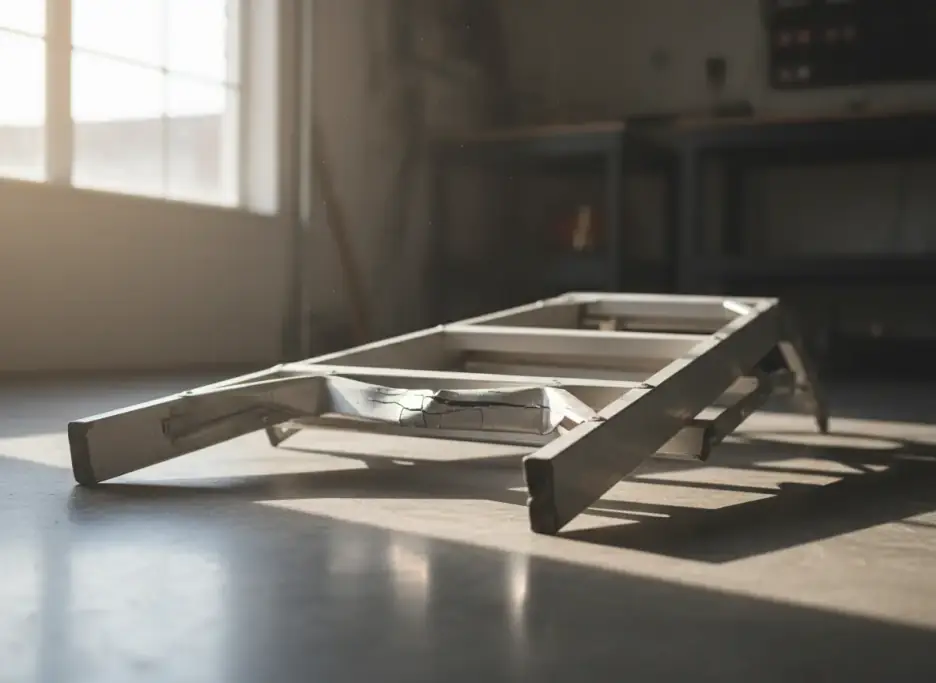
When an ordinary product injures you
Most product injuries happen in the middle of a normal day. A ladder rung gives way in a garage in Dundalk, a space heater overheats in a Baltimore rowhouse, a power tool kicks back, a child's seat fails at the buckle. Cooper & Tuerk, LLP handles product liability for people injured as the result of faulty manufacturing, design, or a defective warning, and the first conversation at the office on North Charles Street starts with the object itself: what it was, where it came from, and what happened when it was used as intended.
Maryland law lets an injured person bring a claim against the companies that put a defective product into the world, and that can include the manufacturer, a parts supplier, a distributor and the store that sold it. Which of them to name depends on the facts. The claim may rest on negligence, on strict liability for a defective product, or on a breach of warranty, and the firm explains how each one works before any choice is made.
Carl E. Tuerk, Jr. practised products liability in Baltimore from 1972 and represented the City of Baltimore in asbestos actions against manufacturers. That is firm history, and it is why these cases are a familiar kind of work in the office, not a stranger to it. The firm's stated approach is to deal with each client directly, with an attorney and not a paralegal, from the first telephone call.
Manufacturing, design and warning defects
The law sorts product defects into three kinds, and the kind decides how the case is built. A manufacturing defect means this particular unit came off the line wrong: a weld that was never finished, a batch of contaminated material, a part that does not match the maker's own drawings. The proof is often found by comparing the failed item with others of the same model.
A design defect is a different claim, because every unit looks as the maker intended and the design itself is unreasonably dangerous. Expert engineers usually come into the case here, to show how the product failed and whether a safer design was practical. A warning defect is about what the buyer was told: missing instructions, a hazard that was never mentioned, or a label so small or so vague that no ordinary user would act on it.
Many cases involve more than one of these at once. The firm reads the product, the manual and the packaging with that in mind, and asks early whether the failure points to one defect or several, because the answer shapes who the claim is against and who the experts need to be. A frayed cord, a cracked housing or a missing guard can each point to a different defect, and the right time to sort that out is before the item has been moved.
Preserving the product and the evidence
The product is the most important piece of evidence you have, and the most easily lost. Keep it. Do not repair it, clean it, throw it away, or mail it back to the manufacturer, even if a company representative asks for it politely. Put it somewhere safe, photograph it where it failed and from every side, and keep the packaging, the manual, the receipt, the serial or lot number and any recall notice. If it is too large or too dangerous to store, call the office before you move it.
Then protect the rest of the record: the scene, the clothes you were wearing, the names of anyone who saw the failure, and every medical record from the first emergency visit onward. A defective product usually has to be examined by an engineer under a protocol that all sides can check, and a product that was altered or discarded before that examination can weaken the claim badly.
If a lawsuit becomes necessary, it is filed in the Circuit Court for Baltimore City or for Baltimore County, or sometimes in the United States District Court for the District of Maryland. Strict deadlines apply to these claims, so call the office at (410) 539-0300 promptly. The firm serves Baltimore City, Baltimore County and Anne Arundel County, and its office at 201 North Charles Street is open to clients by appointment, with an attorney, not a paralegal, at the table.